The Lazy Girl's Guide to Yule ❄️🕯️(+free ritual printable sheets)

Updated: Dec 11, 2025

This post contains affiliate links, which means I may earn a small commission if you make a purchase through these links at no extra cost to you. I only recommend products I genuinely believe are useful. Thanks for supporting Edge and Altar!
You've probably seen those elaborate Yule celebration guides with complex solstice rituals, outdoor fire ceremonies, and altars that look like they were styled for a magazine photoshoot.
What if I told you Yule could be as simple as lighting a candle at sunset and setting one intention for the coming year?
This guide is for people who want to honor the winter solstice without elaborate preparations, expensive supplies, or pretending they have the energy for all-night vigils in December.
Let's talk about Yule magic that actually fits into real life.
What Is Yule (And Why It Actually Works)
Yule is the winter solstice—the shortest day and longest night of the year in the Northern Hemisphere. It falls around December 20-23 (this year it's December 21st).
The traditional story:
The sun "dies" at its weakest point and is "reborn" the next day, with daylight slowly returning. Ancient cultures celebrated this astronomical turning point because it meant survival—longer days meant spring was coming, crops would grow again, life would return.
Why this resonates psychologically:
The winter solstice is a real, observable turning point. After this date, days literally get longer. There's something deeply reassuring about celebrating the return of light during the darkest time of year.
It's not woo-woo to mark this moment. Humans have done it for thousands of years across dozens of cultures—from Stonehenge to Newgrange to Indigenous peoples across the Northern Hemisphere. We're wired to notice and respond to seasonal shifts.
Modern Yule is about:
Celebrating that you've made it through the dark
Acknowledging rest and reflection are necessary
Welcoming the return of light (hope, energy, growth)
Marking the year's turning point with intention
You don't need to believe in literal sun gods or complex mythology. You can celebrate Yule as a secular, nature-based holiday that acknowledges a real astronomical event and gives you space to reflect during a chaotic season.
✨ Free Yule Ritual Download
Bring warmth and intention into your winter season. Download The Lazy Girl’s Yule Ritual Pack — two printable pages designed for ease, beauty, and quiet reflection.
💫 Page 1: The Yule Ritual Sheet — a one-page guide to colors, correspondences, and five simple Winter Solstice rituals for modern witches.
🌙 Page 2: The Intention & Reflection Sheet — space to set your solstice focus, notice what shifts, and carry your insights into the new year.
A candle. A breath. A returning light.
You Don't Need Much (Really)
Traditional Yule guides will tell you that you need:
A Yule log (specific wood, carved with symbols, burned in a fireplace you definitely don't have)
Evergreen boughs (ethically harvested from your own land)
Gold and silver candles (representing sun and moon)
Mulled wine with hand-ground spices
A full feast with specific traditional foods
Outdoor ritual space for fire ceremony
What you actually need: One candle and five minutes.
That's it.
If you want to do more, great. But the core of Yule—marking the solstice and welcoming the return of light—can be done with a single candle lit at sunset while you set an intention for the coming year.
Everything else is optional decoration.
Simple Yule Rituals (Choose One or Do All)
Ritual 1: The Solstice Candle (5 Minutes)

What you need:
One white or gold candle (like these simple taper candles )
Matches or lighter (basic matches work fine )
Five minutes at sunset on December 21st
What you do:
At sunset on the solstice (the longest night), light your candle.
As you light it, say out loud: "The sun returns. Light returns. I welcome what's coming."
Watch the candle burn for five minutes. Think about one thing you want to bring into your life as the days grow longer—more energy, a new project, a shift in perspective, whatever feels right.
When you're ready, blow out the candle and say: "The light grows from here."
That's it. You just celebrated Yule.
Why this works:
You're marking a real astronomical event
You're using fire (warmth, light) to symbolize the returning sun
You're setting a conscious intention during a natural turning point
You're giving yourself five minutes of stillness during December chaos
Ritual 2: The Darkness Reflection (10 Minutes)

The solstice is the longest night—the darkest point before light returns. There's power in honoring darkness before celebrating light.
What you need:
A dark, quiet space
A journal or piece of paper (simple notebook works)
Ten minutes
What you do:
On the evening of December 21st (or the night before), sit in darkness for a few minutes. No candles yet—just darkness.
Ask yourself:
What am I leaving behind as the year turns?
What did this dark season teach me?
What am I ready to release?
Write down whatever comes up. Don't overthink it.
When you're done, light a candle and read what you wrote. You can keep it, burn it (safely!), or tear it up—whatever feels like closure.
Why this works:
We rush to "toxic positivity" and skip the reflection darkness offers
Winter is supposed to be a time of rest and going inward
Releasing before welcoming creates space for new things
Acknowledging difficulty is part of moving through it
Ritual 3: The Yule Breakfast (15 Minutes)

Who says Yule has to be at night? The sunrise after the longest night is just as powerful—it's the first sunrise of the returning light.
What you need:
Your favorite warm drink (coffee, tea, hot chocolate)
A window or outdoor space where you can see the sunrise
15 minutes on the morning of December 22nd
What you do:
Wake up early enough to watch the sunrise on December 22nd (the morning after the solstice).
Make your favorite warm drink. Stand or sit where you can see the sky lighten.
As the sun rises, think about or say out loud: "The light returns. I'm here to witness it."
Drink your coffee/tea slowly. Notice the sky changing. Notice warmth in your hands. Notice you made it through the longest night.
That's your Yule ritual.
Why this works:
Witnessing sunrise connects you to the actual astronomical event
Morning rituals are easier for busy people than late-night ones
Warm drinks + winter sunrise = cozy + meaningful
You're not performing for anyone—just observing nature
Ritual 4: Apartment-Friendly Evergreen Magic (20 Minutes)
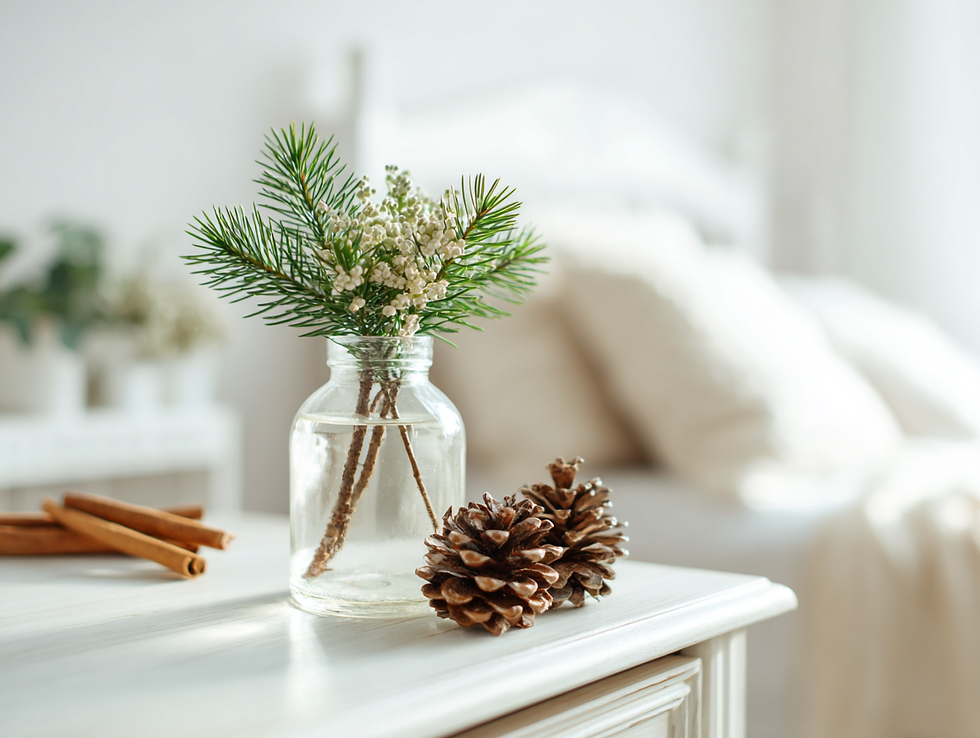
Evergreens (pine, fir, spruce, holly) are traditional Yule symbols because they stay green through winter—they represent endurance, life continuing through darkness.
You don't need to harvest branches from a forest. You can get the same effect with stuff from the grocery store or a faux garland from Target.
What you need:
Small evergreen (or faux evergreen) branch, wreath, or garland (like these preserved real pine leaves- $8-12)
OR fresh rosemary from the grocery store (it's evergreen and smells amazing)
Optional: A few pinecones, cinnamon sticks, or orange slices
What you do:
On or before the solstice, bring evergreen into your space. Place it on your altar, hang it on your door, or put it in a vase on your kitchen table.
As you place it, say: "Even in darkness, life endures. Even in winter, growth continues."
If you want, add pinecones (representing potential), cinnamon sticks (warmth and prosperity), or dried orange slices (sun symbolism).
Leave it up through the winter season as a reminder that the sun is returning, even when it's still cold and dark.
Why this works:
Bringing nature indoors connects you to seasonal rhythms (even in an apartment)
Evergreen's scent is grounding and calming
Visual reminders help maintain intention through the season
You can get evergreen/rosemary for under $5 at any grocery store
Ritual 5: The Gratitude Fire (30 Minutes)

If you have a fireplace, fire pit, or even a candle in a cauldron, this is a simple fire ritual for releasing the old year and welcoming the new.
What you need:
A fire source (fireplace, fire pit, or large candle in a heat-safe bowl)
Small strips of paper
A pen
Matches
What you do:
Write down on separate strips of paper:
Three things you're grateful for from this past year
Three things you're releasing/leaving behind
Three intentions for the returning light
Light your fire. Read each paper out loud, then place it in the flames.
As the gratitude papers burn, say: "I honor what was." As the release papers burn, say: "I let go." As the intention papers burn, say: "I welcome what's coming."
Watch the fire until it burns down naturally.
Why this works:
Fire is a classic transformation symbol (and it's literally transforming paper into ash)
Speaking your gratitudes/releases/intentions out loud makes them more concrete
Watching something burn is cathartic
You're engaging multiple senses (sight, sound, smell, heat)
Common Yule Myths You Can Ignore
Myth 1: "You have to celebrate on the exact moment of the solstice."
The astronomical solstice happens at a specific time (this year, December 21st at 4:20 AM EST). Some people get very particular about timing rituals to this exact moment.
Reality: The spirit of Yule lasts several days—from a few days before the solstice through a few days after. Celebrate whenever works for your schedule. The sun doesn't care if you're 12 hours late.
Myth 2: "Yule is only for Pagans/Wiccans."
Yule has roots in pre-Christian winter solstice celebrations across Europe. Modern Pagans and Wiccans have revived and adapted these traditions, but the solstice itself belongs to no one.
Reality: Anyone can mark the winter solstice. You don't need to identify as Pagan, follow a specific path, or use any particular religious language. It's an astronomical event that humans have celebrated across cultures for millennia.
If you want a completely secular solstice celebration, call it "Winter Solstice" instead of "Yule" and skip any religious language. The ritual still works.
Myth 3: "You need expensive, specific supplies."
Pinterest Yule aesthetics would have you believe you need hand-carved wooden pentacles, ethically sourced beeswax candles, organic evergreen wreaths, and artisan pottery.
Reality: A $3 pack of white candles from Target works exactly the same as a $25 hand-dipped beeswax candle. The magic is in your intention, not your aesthetic.
Use what you have. Dollar store candles are fine. Fake evergreen is fine. Your everyday coffee mug is fine.
Myth 4: "Yule has to be a big feast with specific traditional foods."
Traditional Yule celebrations involved huge feasts with roasted meats, ale, nuts, dried fruits, and fresh-baked bread. Some people still do this (which is great if you like cooking big meals).
Reality: You can "feast" with takeout pizza if that's what you want. The point is to mark the turning of the year, not to recreate medieval Europe.
Eating something warming and comforting on the solstice is lovely—but it doesn't have to be complicated. Hot soup, good bread, your favorite dessert. Done.
Myth 5: "If you're not doing outdoor ritual, you're not doing it right."
Lots of traditional Yule imagery involves bonfires, forest rituals, and outdoor ceremonies.
Reality: Most of us live in apartments, suburban houses, or cities. We don't have access to ritual bonfires or private forest groves. And it's cold in December.
Indoor rituals are just as valid. A candle on your kitchen table works. Your ancestors celebrated indoors too—they weren't standing outside in the freezing cold for hours.
Yule on an Actual Budget
You can celebrate Yule beautifully for under $15:
Minimum Yule supplies ($7-15):
White candles (pack of 4): $3-6 (these taper candles)
Matches: $2 (basic box)
Fresh rosemary from grocery store: $2-3
Small notebook for reflections: $3-5 (simple journal)
Total: $10-15
That's enough for all five rituals listed above.
If you want to expand ($20-30 total):
Add a small faux evergreen garland: $8-12 (like this)
Add cinnamon sticks: $6 (grocery store)
Add a bag of real pinecones (collect free from outside, or $5 at craft store)
Add a small fire-safe bowl for burning papers: $5-9 (simple metal bowl)
Total with extras: $25-35
How to Practice Witchcraft When You're Home for the Holidays
December is complicated for a lot of witches. Maybe you're:
Visiting religious family who wouldn't understand your practice
Sharing space with people who are judgmental about witchcraft
In a childhood home where you feel unable to be yourself
Here's how to mark the solstice even in difficult circumstances:
Subtle Yule (No One Will Notice):
Light a "winter candle" - Call it seasonal décor, not a ritual. White candles are normal holiday decorations.
Take a "winter walk" at sunrise/sunset - Go outside to "get some air" on December 21st. Witness the solstice quietly, just you and the sky.
Journal "year-end reflections" - Plenty of people do year-end journaling. You're just doing it on the solstice intentionally.
Make "hot cocoa" - Make yourself a warm drink on the solstice morning and drink it slowly, setting intentions silently.
Decorate with "winter greenery" - Bring in rosemary, pine, or even just place a pinecone on your nightstand. It's just festive decorating.
No one needs to know you're marking a sacred turning point. Your intention is what matters.
For more on this, check out: How to Practice Witchcraft When You're Home for the Holidays (coming soon!)
Yule for the Totally Overwhelmed
If December is completely chaotic for you (same), here's the absolute minimum:
The 60-Second Yule:
On December 21st, at ANY point during the day:
Light one candle
Take three deep breaths
Say out loud: "The light returns."
Blow out the candle
That's it. You marked the solstice. You honored the turning of the year. You took 60 seconds for yourself during December madness.
It counts.
What to Do After Yule
Yule isn't just December 21st—it's the beginning of the return of light. The days will keep getting longer from here through the summer solstice in June.
Post-Yule practice ideas:
Track the returning light: Notice sunset times getting later. Notice sunrise times getting earlier. Pay attention to the actual lengthening days. You can track this in your journal or just observe it.
Monthly check-ins with your solstice intention: Whatever intention you set on the solstice, revisit it monthly. Is it growing? Does it need adjustment?
Rest through January: Just because the light is returning doesn't mean you need to immediately spring into action. Winter continues. Rest is still appropriate. Let things grow slowly.
Yule Journaling Prompts
If you want to go deeper with the solstice, here are some reflection questions:
Before the solstice (December 1-20):
What am I ready to leave behind as the year ends?
What did darkness teach me this year?
What do I want to welcome as the light returns?
On the solstice (December 21):
What do I want to grow in the returning light?
What small change can I make that will compound over the next six months?
How can I honor both darkness and light in my life?
After the solstice (December 22-31):
How can I tend to the intentions I planted?
What does "returning light" mean to me personally?
How can I carry solstice stillness through the rest of winter?
A Note on Yule vs. Christmas
Yule falls right around Christmas, and there's a lot of overlap. Many Christmas traditions (evergreens, gift-giving, feasting, lights) actually come from pre-Christian solstice celebrations.
You can celebrate both. You can celebrate one. You can celebrate neither.
If you're celebrating with Christian family but want to honor the solstice, you can do both—light a private solstice candle in your room on the morning of the 21st, then participate in Christmas traditions on the 25th. They're not mutually exclusive.
If you're feeling overwhelmed by Christmas commercialism and family expectations, Yule can be your quiet, personal practice before the holiday chaos. It's for you, not for anyone else.
Getting Started This Week
Your first Yule practice doesn't have to be perfect or elaborate. Here's what to do:
This week (before December 21):
Pick one ritual from this guide - Start with "The Solstice Candle" if you're new to this.
Get your supplies - One candle, matches, five minutes. That's all you need.
Mark your calendar - Put "Yule" or "Winter Solstice" on December 21st. Set a reminder for sunset.
Optional: Reflect - Journal on what you want to release and what you want to welcome.
On December 21st, do your chosen ritual. Notice how it feels. You don't need to post about it, tell anyone, or make it perfect.
You're just marking the longest night and the returning sun. Like humans have done for thousands of years.
Want More?
Related posts:
Lazy Girl's Guide to Candle Magic - Learn simple candle magic for any ritual
Lazy Girl's Guide to Planetary Magic - Easy ways to work with planetary magic
Minimalist Altar Setup - Create a small sacred space anywhere
15-Minute Daily Rituals - Build a sustainable practice
Need supplies?
If you want to invest in a small Yule kit, here's what I recommend (everything under $30):
Basic Yule Kit ($10-15):
White taper candles (4-pack) - $6
Matches - $2/box
Fresh rosemary from grocery store - $3
Simple journal - $5
Expanded Yule Kit ($25-35):
Everything above, PLUS:
Faux evergreen garland - $10
Cinnamon sticks - $4
Small fire-safe bowl - $6-9
Want more detailed Yule shopping recommendations? Check out: Yule on a Budget: Complete Shopping List Under $30 💰
The Bottom Line
Yule doesn't have to be complicated.
You don't need:
❌ A fireplace or outdoor fire pit
❌ Expensive supplies or specific tools
❌ Hours of preparation
❌ Perfect aesthetic or Instagram-worthy setup
❌ Anyone else's permission or approval
You just need:
✅ One candle
✅ Five minutes
✅ Awareness that this is the longest night
✅ Intention to welcome the returning light
That's Yule.
Everything else is optional.
The solstice happens whether you mark it or not—but there's something powerful about pausing to notice the year's turning, to honor darkness before celebrating light, to set one intention as days begin to lengthen again.
You made it through the dark. The sun is coming back.
Welcome it however feels right for you.
Happy Yule. ❄️🕯️✨
Save This Post
Want to remember this for next year? Save it to Pinterest! (And check out more simple rituals on my Lazy Girl's Guides Pinterest board)
Pin images:
"Lazy Girl's Guide to Yule - Simple Winter Solstice Rituals"
"How to Celebrate Yule in 5 Minutes"
"Yule for Beginners - No Fancy Supplies Needed"
"Apartment-Friendly Winter Solstice Magic"
Comments
Have you celebrated Yule before? What's your favorite simple solstice ritual? Drop a comment below—I'd love to hear how you're marking the longest night this year! 👇


Comments